André Breton
Writing
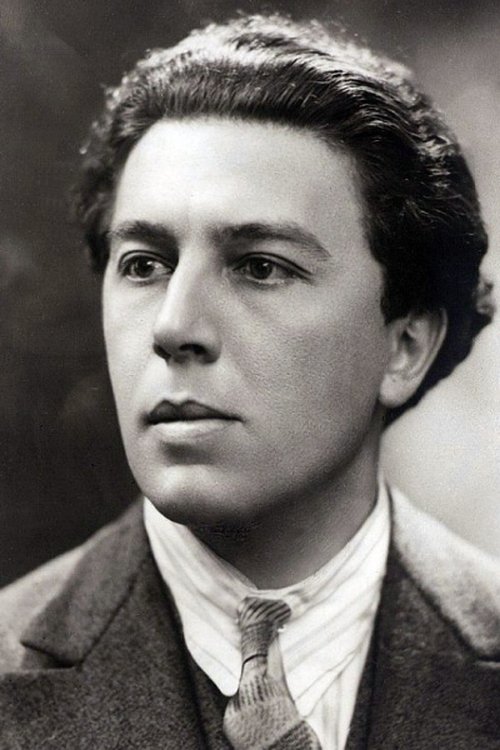
André Robert Breton (19 February 1896 – 28 September 1966) was a French writer and poet, the co-founder, leader, and principal theorist of surrealism. His writings include the first Surrealist Manifesto (Manifeste du surréalisme) of 1924, in which he defined surrealism as "pure psychic automatism". Along with his role as leader of the surrealist movement he is the author of celebrated books such as Nadja and L'Amour fou. Those activities, combined with his critical and theoretical work on writing and the plastic arts, made André Breton a major figure in twentieth-century French art and literature. André Breton was the only son born to a family of modest means in Tinchebray (Orne) in Normandy, France. His father, Louis-Justin Breton, was a policeman and atheistic, and his mother, Marguerite-Marie-Eugénie Le Gouguès, was a former seamstress. Breton attended medical school, where he developed a particular interest in mental illness. His education was interrupted when he was conscripted for World War I. During World War I, he worked in a neurological ward in Nantes, where he met the Alfred Jarry devotee Jacques Vaché, whose anti-social attitude and disdain for established artistic tradition influenced Breton considerably. Vaché committed suicide when aged 23, and his war-time letters to Breton and others were published in a volume entitled Lettres de guerre (1919), for which Breton wrote four introductory essays. Breton married his first wife, Simone Kahn, on 15 September 1921. The couple relocated to rue Fontaine No. 42 in Paris on 1 January 1922. The apartment on rue Fontaine (in the Pigalle district) became home to Breton's collection of more than 5,300 items: modern paintings, drawings, sculptures, photographs, books, art catalogs, journals, manuscripts, and works of popular and Oceanic art. Like his father, he was an atheist. Breton launched the review Littérature in 1919, with Louis Aragon and Philippe Soupault. He also associated with Dadaist Tristan Tzara. In 1924, he was instrumental in the founding of the Bureau of Surrealist Research. In Les Champs Magnétiques (The Magnetic Fields), a collaboration with Soupault, he implemented the principle of automatic writing. He published the Surrealist Manifesto in 1924, and was editor of the magazine La Révolution surréaliste from that year on. A group of writers became associated with him: Soupault, Louis Aragon, Paul Éluard, René Crevel, Michel Leiris, Benjamin Péret, Antonin Artaud, and Robert Desnos. Eager to combine the themes of personal transformation found in the works of Arthur Rimbaud with the politics of Karl Marx, Breton joined the French Communist Party in 1927, from which he was expelled in 1933. Nadja, a novel about his encounter with an imaginative woman who later became mentally ill, was published in 1928. Breton celebrated the concept of Mad Love, and many women joined the surrealist group over the years. Toyen was a good friend. During this time, he survived mostly by the sale of paintings from his art gallery. ... Source: Article "André Breton" from Wikipedia in English, licensed under CC-BY-SA 3.0.